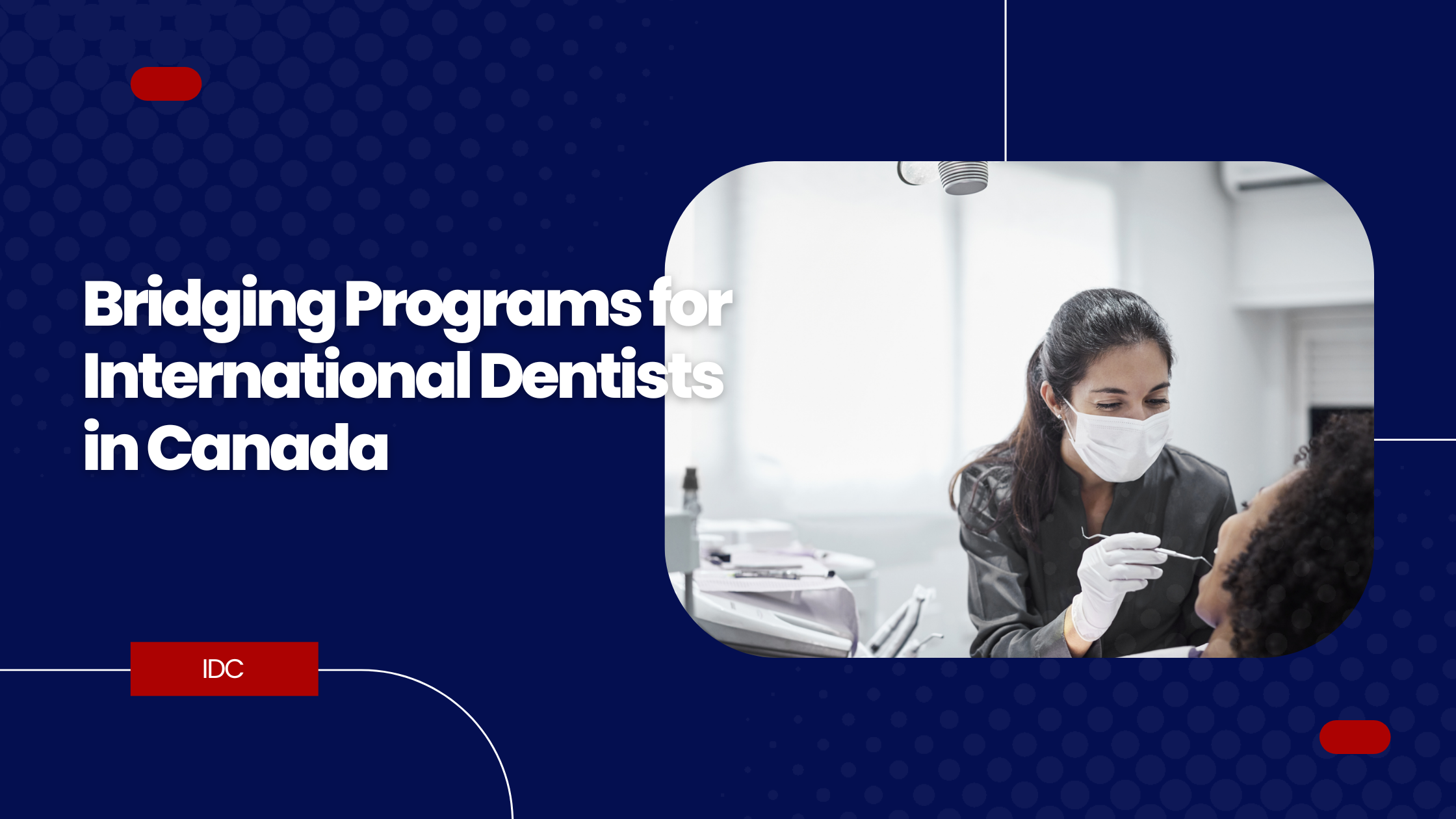
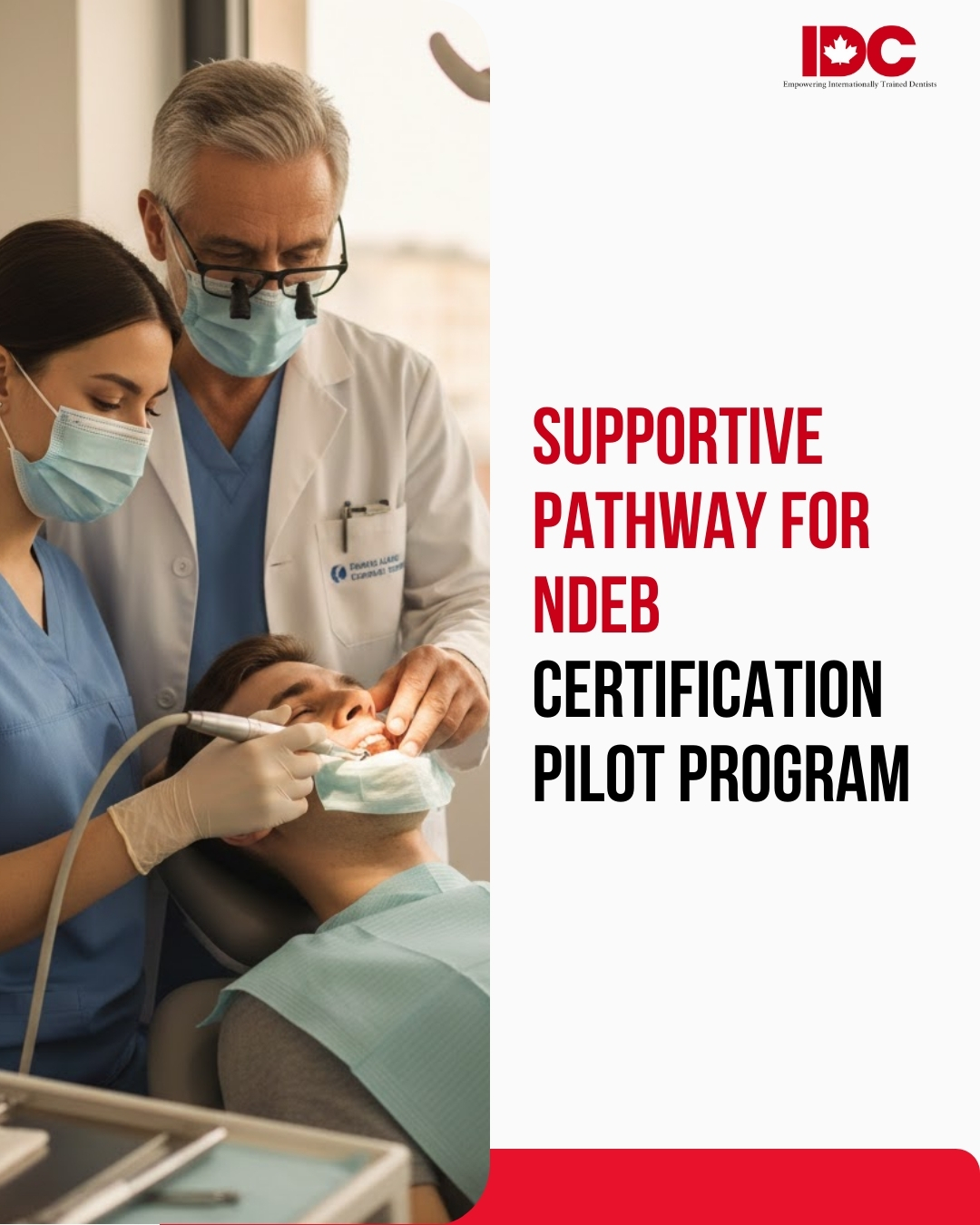
The College of Dental Surgeons of Alberta has launched a Supportive Pathway Pilot Program for Internationally Trained Dentists (ITDs) who have graduated from non-accredited undergraduate dental programs. This initiative is intended to assist ITDs as they work toward National Dental Examining Board (NDEB) certification, while simultaneously providing structured exposure to the Canadian dental practice environment.
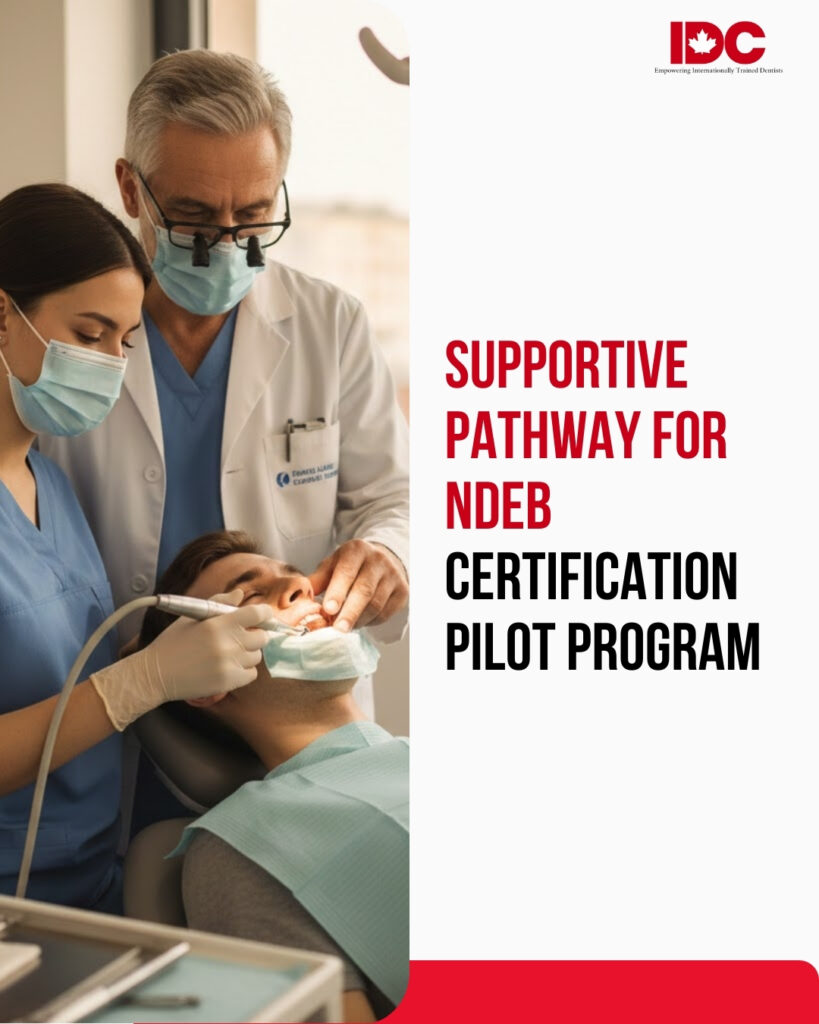
Through the Supportive Pathway, eligible ITDs may practice as Oral Health Care Professionals (OHCPs) in underserved communities while progressing through the NDEB certification process. Participants will be granted a restricted registration permit (main register with conditions) and will practice under the direct supervision of an approved Supervising Dentist.
The pilot program’s inaugural intake will accept up to twelve (12) applicants for a one-year, contract-based position. The Supportive Pathway Committee will review applications and make recommendations to the Registrar, who will render the final admission decisions.
Once accepted into the program, ITDs will be matched with a Supervising Dentist. A formal contract between the ITD and the Supervising Dentist will outline the scope of practice, responsibilities, supervision requirements, and remuneration structure.
The restricted registration permit issued under the Supportive Pathway is valid only within the province of Alberta and is not transferable to other Canadian jurisdictions.
Participants are strongly encouraged to continue pursuing the NDEB Equivalency Process while enrolled in the Supportive Pathway. This program is intended to complement—rather than replace—the NDEB Equivalency Process.
Key Features
- Work as an Oral Health Care Professional (OHCP) in underserved Alberta communities
- Restricted registration permit (main register with conditions)
- Direct supervision by an approved Supervising Dentist
- Hands-on exposure to Canadian clinical workflows
- One-year contract-based employment opportunity
Program Structure
- Up to 12 applicants accepted in the initial pilot intake
- One-year contracted positions
- Applications reviewed by the Supportive Pathway Committee
- Final approval granted by the Registrar
- Formal contract outlining roles, responsibilities, supervision, and remuneration
Important Notes
- Restricted registration is valid only within Alberta and is not transferable
- This program does not replace the NDEB Equivalency Process
- Participants are encouraged to continue NDEB exams while enrolled
Comparison with Other Provincial Pathways
| Province | Regulatory Body | Supervised Work Before NDEB | Pathway Type | Key Limitation |
| Alberta | College of Dental Surgeons of Alberta | Yes | Supportive Pathway Pilot | Restricted to Alberta |
| Ontario | Royal College of Dental Surgeons of Ontario | No | NDEB Only | No clinical work pre-NDEB |
| British Columbia | College of Dental Surgeons of British Columbia | No | NDEB Only | Observerships only |
| Nova Scotia | Nova Scotia Dental Board | No | NDEB Pathway | Licensure after NDEB only |
| Manitoba | Manitoba Dental Association | No | NDEB Pathway | No interim practice option |
| Saskatchewan | College of Dental Surgeons of Saskatchewan | No | NDEB Pathway | No structured pre-licensure pathway |
Applicant Requirements
- Approved application and acceptance to the NDEB Equivalency Process.
- Successful completion of the NDEB Assessment of Fundamental Knowledge (AFK).
- Successful completion of the NDEB Assessment of Clinical Judgement (ACJ) within the last three (3) years.
- Submit Application and Documentation:
- Complete and submit the application form provided by the College.
- Ensure all required supporting documents are included as per the application guidelines.
- English Language Proficiency: The ITD must demonstrate proficiency in English, meeting the requirements outlined in the CDSA English Language Proficiency Policy RP-01. Applicants currently in an active registration with another Alberta Oral Health Regulator (Hygienist, Dental Assistant, Denturist, Technologist) are considered to have met the requirements for English Language Proficiency.
An English language proficiency test is required when:
- There is no equivalent English proficiency requirement in the jurisdiction where the applicant is currently or has been registered.
- The dental school or postgraduate dental education program was conducted in a language other than English.
Applicants who are required to demonstrate English language proficiency must complete an academic version of an English language proficiency test within 24 months before applying for registration.
- Be a Canadian Citizen, a Permanent Resident of Canada, or authorized as lawfully permitted to work in Canada. Preference will be given to applicants currently living in Alberta.
- Proof of current Basic Life Support (HCR/CPR) including AED equivalent certification within the last twelve (12) months.
- Be willing to potentially relocate to a remote dental practice for one (1) year.
- Meet any other criteria as determined by the Registrar, ensuring that all necessary qualifications, standards, and competencies are met to provide safe and effective care.
Supervising Dentist Requirements
- Hold a current, unrestricted practice permit as a General Dentist in Alberta.
- Be in good standing with the College.
- Practicing for a minimum of five (5) years.
- Propose and demonstrate that your practice is in an underserved area, for reasons such as:
- Shortage of oral health care professionals
- Unmet, high patient demand
- Maintain a clinical practice facility equipped with the necessary infrastructure to provide a supportive learning environment.
- A willingness to actively supervise and guide individuals, fostering their professional development and integration into the Alberta Dental Profession.
- Ensure impartiality by disclosing any potential conflicts of interest.
- Be engaged in full-time practice at the facility and available to supervise the ITD on an ongoing basis.
- Be willing to employ the ITD in accordance with applicable labour laws and regulations. An employment contract must be formalized and signed.
- Meet any other criteria as determined by the Registrar, ensuring that all necessary qualifications, standards, and competencies are met to provide safe and effective care.